
Duplicates. Can We Really Delete Them?
As a professional photo manager, I work with people’s photos on a regular basis. And, because I’m busy with client work, I rarely take care of my own collection. Fortunately, I’m a Type-A person and, for the most part, my photos are pretty well organized. However, there are still those outliers and those photos that I haven’t seen in a while. And, those are the ones that sting when I see them.
A few months ago, I was trying out a program called Mylio. In short, Mylio promises to collect all photos from various sources and allow you to have access in one central location. This is pretty cool since it helps take care of the chaos we all feel when all our photos are scattered across multiple devices
When my father passed away, I created a folder of photos to use in the displays of memorial boards. I also kept the copies in the original source file of who they came from. And, just to be safe, I created a third folder if any of the photos had my mom in them. So, when Mylio pulled my photos from the folder on my desktop, it pulled in all three versions.
I needed to delete them.
But, was I sure that what I was deleting was the right one? Would I know where to find the file when I needed to look for it?
I do this for a living and delete duplicate files all. The. Time. Yet, when I do it for myself, it’s harder. I struggle just like my clients do because letting go is hard.
The Real Problem Usually Isn’t the Duplicate
Most people think duplicates are the issue. But, they’re not the true issue. The real issue is uncertainty.
People do not trust themselves to delete photos because they no longer know where the “real” version lives. Is it on the phone? The external hard drive? The desktop computer? The cloud? The old laptop in the closet? The USB drive labeled “Misc Stuff”?
Once photos become scattered across devices, backup systems, shared folders, text messages, downloads, and editing apps, every deletion starts to feel risky.
And, honestly, that fear is justified. Because sometimes there is only one surviving copy.
That is why I often tell clients that deduplication should not be the first step. Centralization should be.
You Cannot Organize What You Cannot See
One of the biggest mistakes people make is trying to clean up photos while they are still spread across multiple locations.
It becomes impossible to answer basic questions:
Which version is the highest quality?
Which file has the original metadata?
Which folder structure makes sense?
Is this backed up somewhere else?
Did I already edit this version?
Am I deleting the original or just a copy?
“Duplicates become emotionally charged when you no longer trust your system.”
When photos are fragmented across devices, every decision feels harder than it should.
This is why I encourage people to create what I call a photo HUB. One primary location where all photos live. It does not mean you only have one backup. In fact, you absolutely should have backups. But, it does mean there is one trusted home base for your collection.
Once everything is together, duplicates become much easier to identify because context starts to emerge, and, you can see your entire story.
Why We Create Duplicates in the First Place
Most duplicates are not created because people are careless. They are created because people are trying to protect memories.
We duplicate photos because:
We are afraid of losing them
We want to “save them just in case”
We move files between devices
We text ourselves photos
We download the same image multiple times
We export edited versions
We combine family collections
We inherit photos after someone passes away
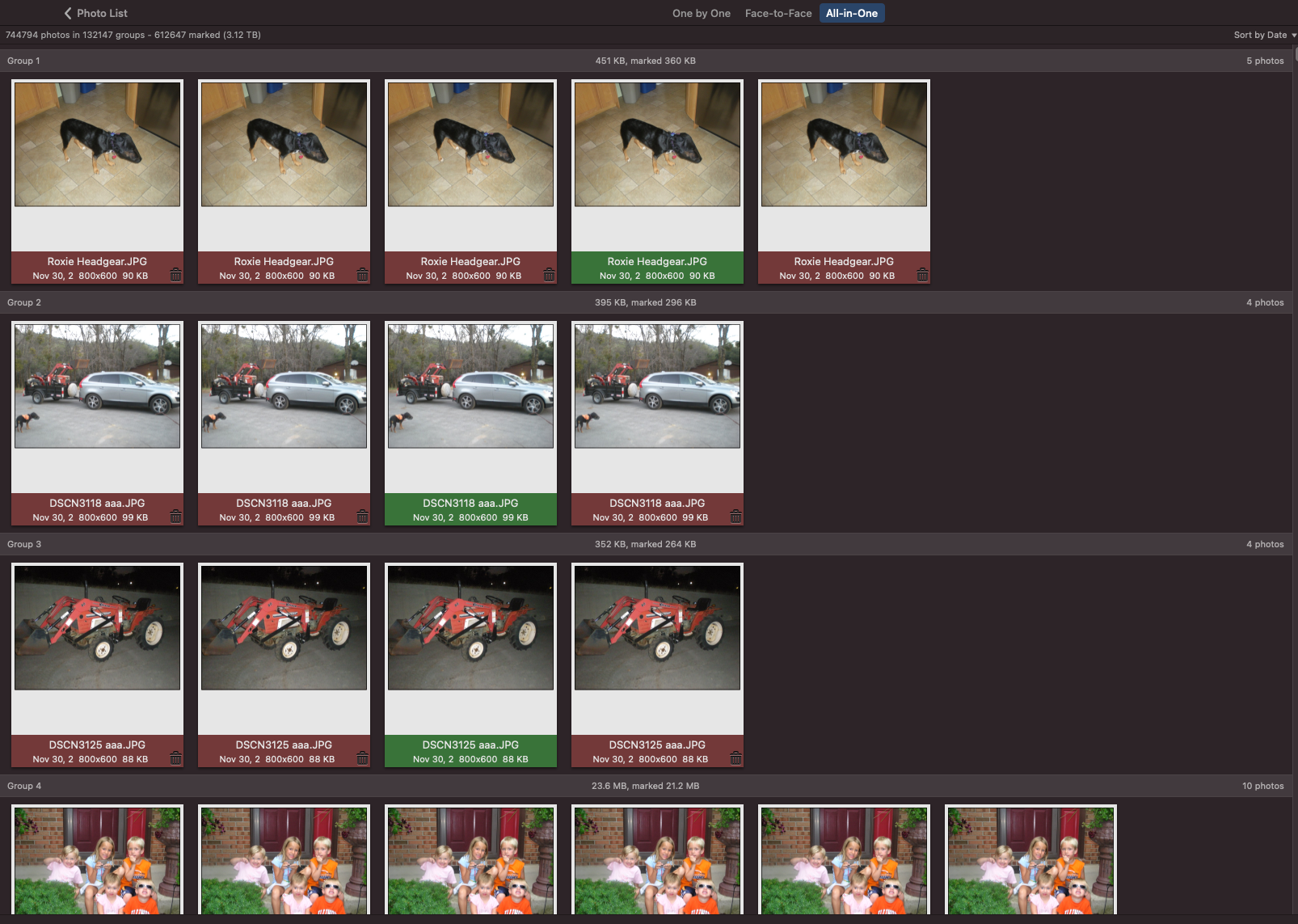
In many ways, duplicates are evidence of love, grief, responsibility, and good intentions.
That is why deleting them can feel surprisingly emotional.
In my father’s case, each folder represented a different purpose during a difficult time of my life. One folder was for the memorial boards. Another preserved where the images originally came from. Another grouped together photos with my mom. Each copy served a purpose at the time.
But, years later, those systems no longer served me. They only created confusion.
The Goal Is Confidence, Not Perfection
I think people assume professional photo organizers are ruthlessly deleting thousands of files without hesitation.
That is not true.
Good photo management is not about aggressively purging memories. It is about creating clarity.
When I help clients dedupe photos, we are not just removing copies. We are building trust in the system itself. We are creating an environment where they know:
where their photos live
how they are backed up
which version is the keeper
and how to actually find things later
Because once people trust their system, the emotional resistance starts to soften.
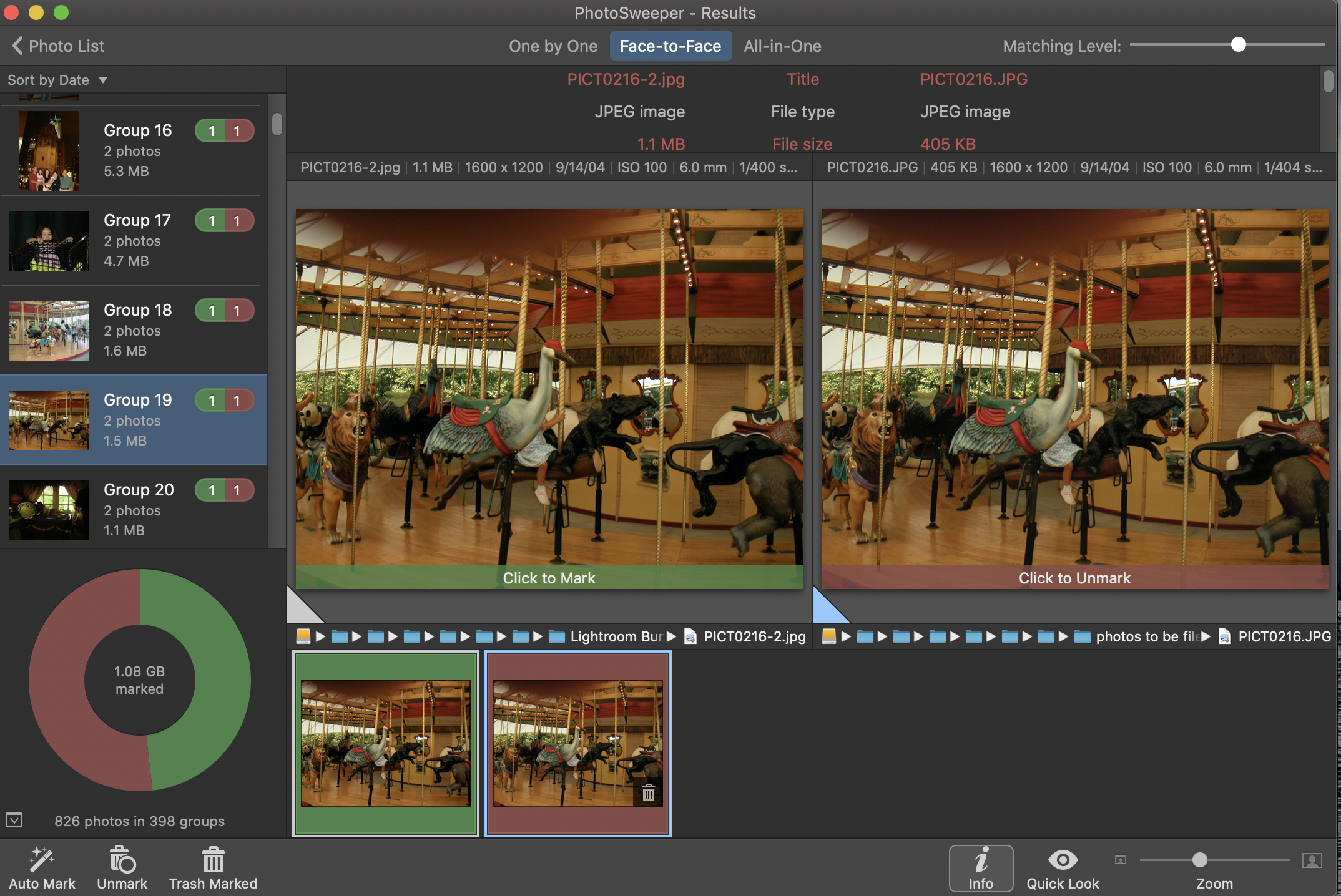
The goal is not to own fewer photos.
The goal is to finally feel at peace with the ones you have.
Start Here Instead
If your photo collection feels overwhelming, resist the urge to immediately start deleting duplicates.
Instead:
Identify all the places where your photos currently exist
Choose a primary photo hub
Begin consolidating photos into one central location
Create a backup before deleting anything
Then begin reviewing duplicates with context and confidence
This process takes longer upfront, but it prevents panic later.
And, most importantly, it allows you to stop wondering where your memories actually live.
Final Thoughts
Duplicates are often a symptom of caring deeply about our photos. We keep extra copies because these moments matter to us. Because they represent people we love, chapters we miss, and memories we are afraid to lose. But, there comes a point where too many copies stop protecting our memories and start burying them.
Sign up for our mailing list for photo book tips, organizing tricks, and all sorts of other fun and useful content.